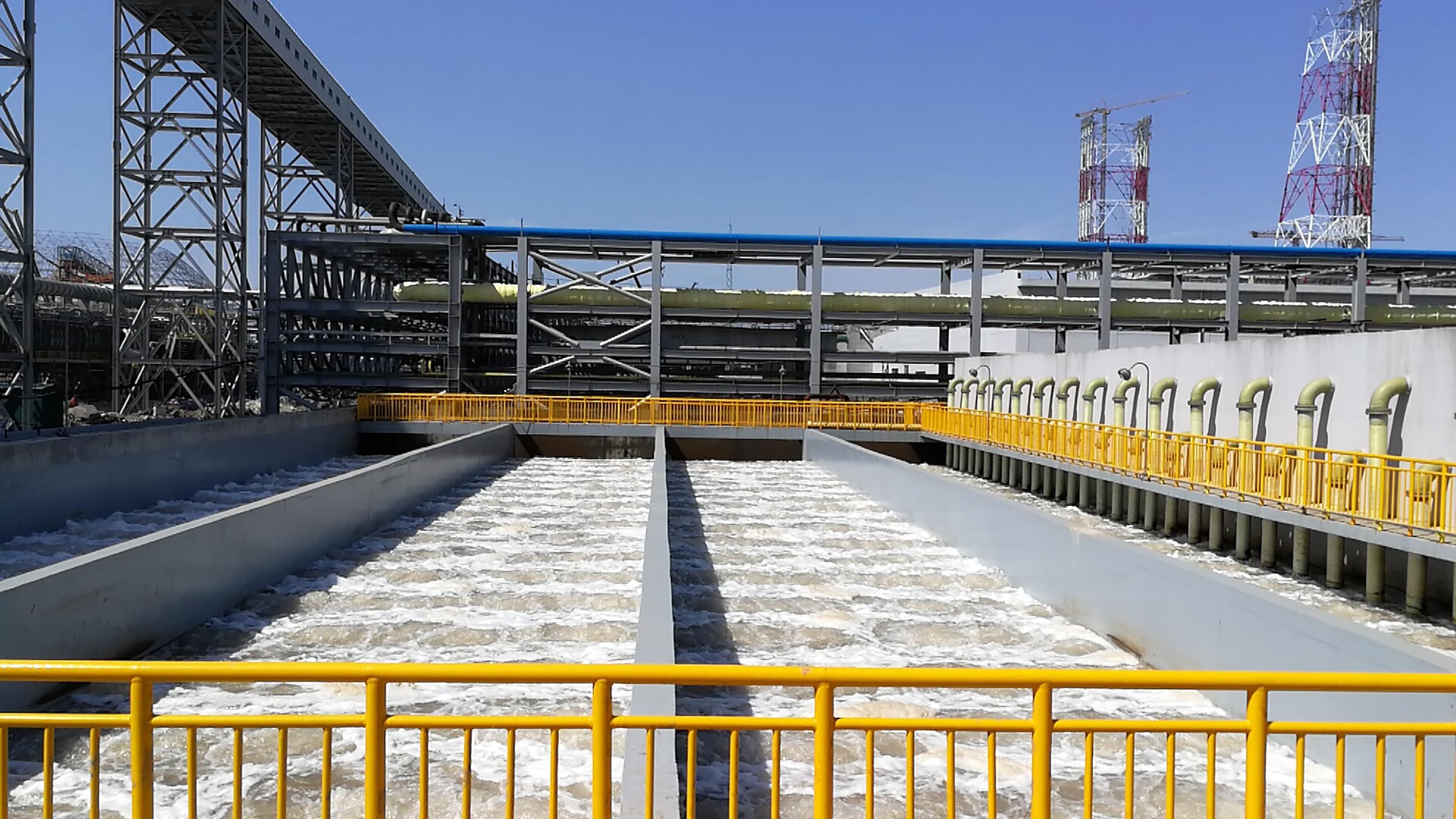
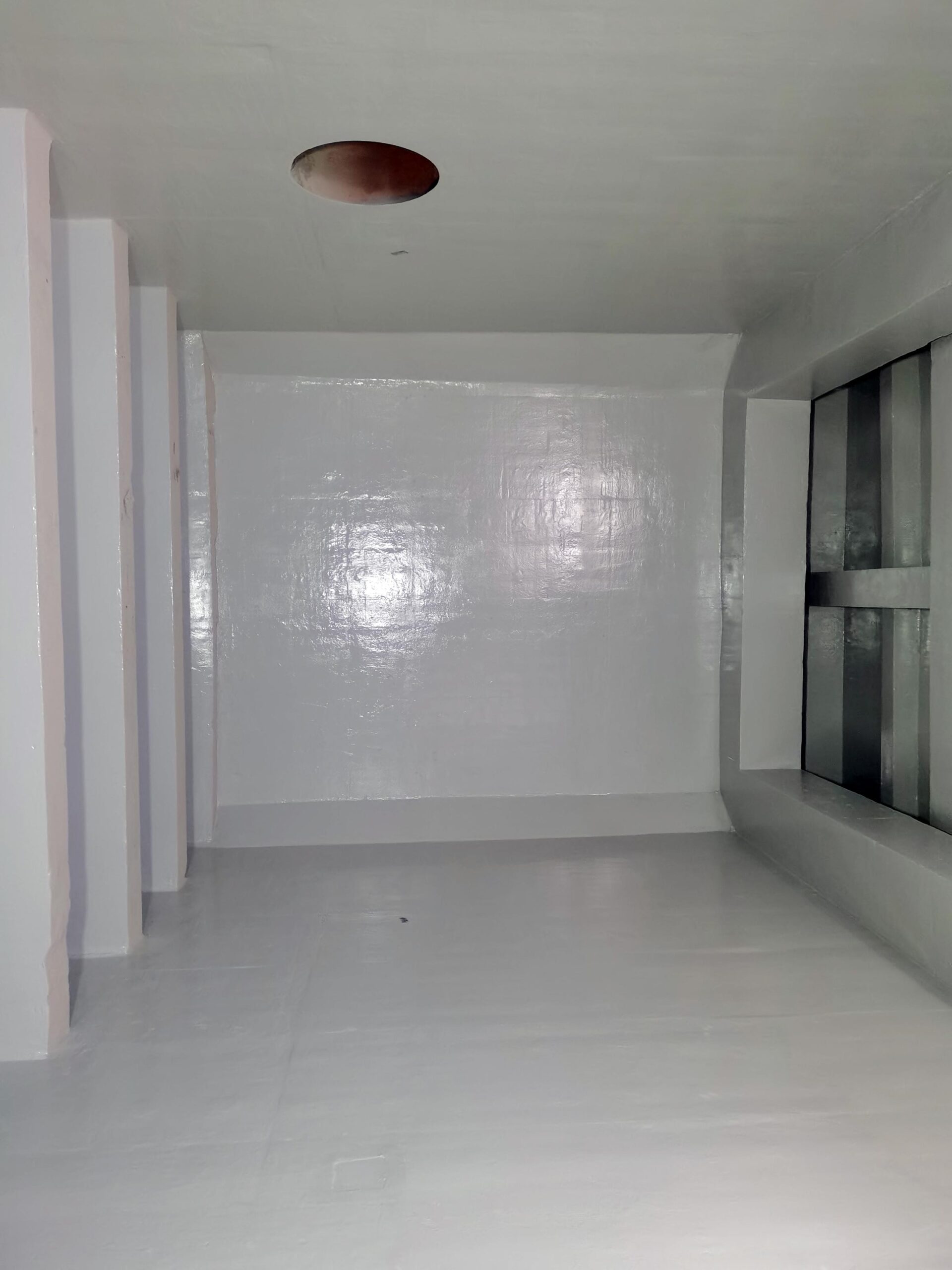
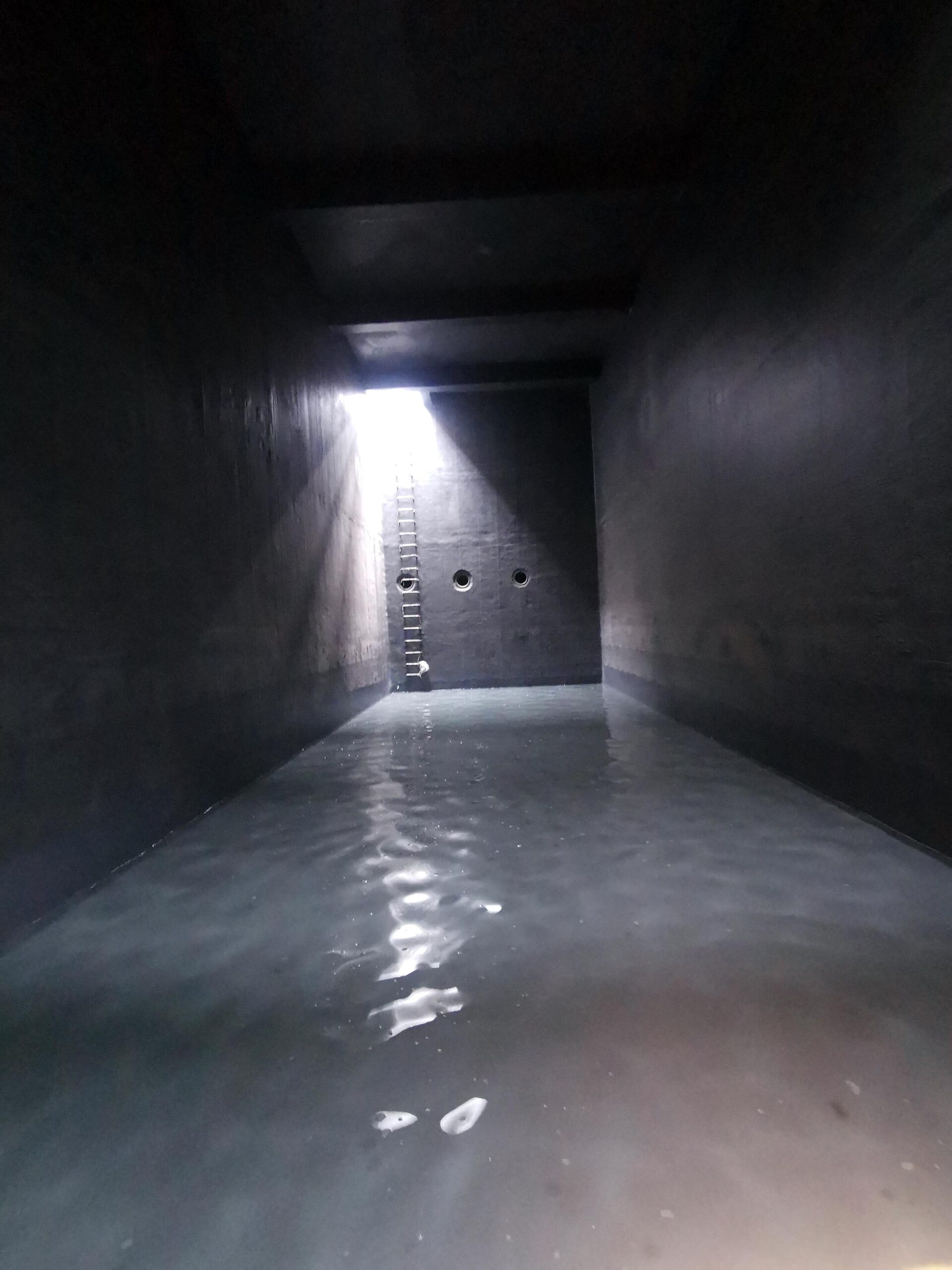
Water is the foundation of life and the backbone of industrial development—an indispensable and irreplaceable strategic resource. As industrialization continues to accelerate, industrial wastewater treatment faces increasingly severe challenges, and the market demand for efficient, reliable treatment systems is rising rapidly.
Concrete is widely used in industrial wastewater treatment facilities due to its excellent durability, compressive strength, impermeability, abrasion resistance, and corrosion resistance.
However, acids, alkalis, salts, hydrogen sulfide, chlorides, microorganisms, and carbonation combined with fluctuating humidity, pH, and temperature, can all cause progressive deterioration of concrete structures.
Conventional anti-corrosion coatings rarely endure under such harsh conditions. Once protection fails, it may lead to concrete cracking, rebar corrosion, and wastewater leakage—polluting soil and groundwater, threatening structural safety, and resulting in high repair costs and significant production losses.
Genecoat focuses on protecting concrete wastewater treatment tanks and basins in industries such as steelmaking, chemicals, pharmaceuticals, and thermal power generation.
We understand that corrosive media and operating conditions vary widely across industrial wastewater streams; therefore, we are committed to delivering a tailor-made protection solution for every project.
Industrial wastewater is highly destructive with typical characteristics including:
In such extreme corrosive environments, applying a high-performance protective lining to provide full-surface, integral protection for concrete tanks is the only reliable option. Below are three concrete protection solutions offered by Genecoat for harsh industrial wastewater conditions:
| Protection System | Category | Key Advantages | Limitations & Risks | Recommended Applications |
|---|---|---|---|---|
|
Solution 1 Fiberglass reinforced plastic (FRP) lining (e.g., "3 layers of fabric + 5 coats of resin"; FRP per GB/T 50046) |
FRP lining |
1. Excellent overall impermeability. 2. High tensile strength and good flexibility; can bridge substrate movement and cracks. |
1. Chemical resistance depends on the resin type (epoxy, vinyl ester, etc.); performance may be less stable under high temperature and strongly oxidizing media compared with premium lining coatings. 2. If surface preparation or resin impregnation is inadequate, risks include poor adhesion, delamination, blistering and leakage; repair can be difficult. |
1. Tanks where crack-bridging capability is critical. 2. Projects with experienced FRP contractors and strong quality control. |
|
Solution 2 High-strength epoxy mortar leveling layer + chemical-resistant lining coating |
Chemical-resistant coating lining |
• When using high-performance systems (chemical-resistant epoxy, epoxy novolac, vinyl ester, etc.), it provides strong resistance to most chemicals—especially suitable for mixed acids, alkaline/neutral saline wastewater, and solvent-containing wastewater. • Dense and impermeable; fast application; easy to repair; cost-effective. |
1. The coating is relatively rigid; it may crack if substrate cracks propagate. 2. Lower resistance to mechanical impact/abrasion. 3. Not recommended for structures with shrinkage deformation, potential cracking, or insufficient stiffness. |
1. Existing tanks where cracks are already stable, or new tanks with strong structural restraint and low cracking risk. 2. Highly corrosive wastewater with moderate temperature and stable structure. 3. Projects prioritizing efficient construction, reasonable cost, and controllable quality. |
|
Solution 3 Composite Lining System High-strength epoxy mortar leveling layer + FRP + chemical-resistant lining coating |
Composite anticorrosion lining (FRP lining + chemical-resistant coating lining) |
• The FRP layer helps distribute stress and reduces cracking in the top coating due to stress concentration. • Can bridge and mask concrete cracks/shrinkage movement to a certain extent, while providing excellent chemical resistance and good high-temperature performance. • Combines crack resistance, impermeability, and corrosion resistance in one integrated system; broad applicability and high reliability. |
• More complex steps and longer schedule; higher overall cost. |
1. New wastewater tanks, especially with high temperature, strong corrosion, and risks of shrinkage/thermal cracking. 2. Projects requiring very high impermeability but aiming to avoid expensive and hard-to-repair block linings (e.g., acid-resistant brick, granite). 3. Tanks requiring maximum chemical resistance, crack tolerance, and long service life. |
Differences among protection systems for concrete industrial wastewater tanks:
Composite protection system ≈ lining coating system > FRP;
Composite protection system ≈ FRP > lining coating system. For newly built tanks, the composite protection system is preferred;
Composite protection system > FRP ≈ lining coating system.
For the protection of industrial wastewater tanks, it is essential to avoid using ordinary polymer cement mortar (PCM), cementitious crystalline waterproofing materials, or low-end coatings. These materials are highly likely to fail quickly under harsh industrial wastewater conditions, which will not only cause frequent leakage and structural damage, but also lead to high repair costs and significant production downtime losses.
From a life-cycle cost perspective, investing in a high-performance anti-corrosion lining system is the most economical and reliable choice to achieve long-term safe and stable operation. In addition, ensuring that the project is delivered by a technical team with professional qualifications in industrial corrosion protection, providing an overall solution and being responsible for implementation, is also a key step to ensure protection performance and investment value